

Why Design for Manufacturing Prevents Costly Hardware Failure
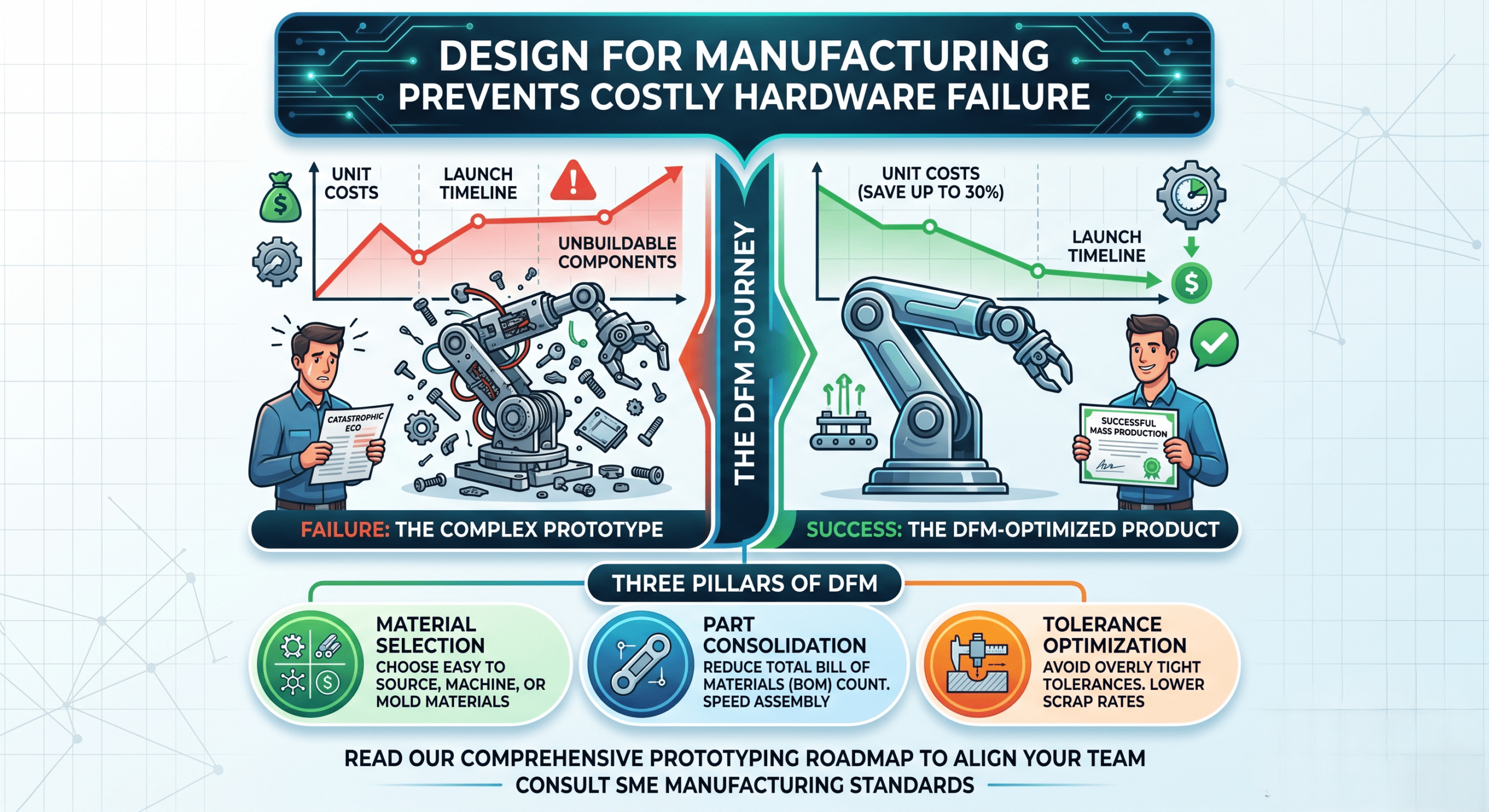
A beautiful prototype is useless if you cannot mass-produce it affordably. Discover the core principles of Design for Manufacturing (DFM) in our latest deep dive. Learn how early choices in materials, part consolidation, and tolerances can slash your unit costs by up to 30%. Master these strategies today to shave months off your product launch timeline.
What is Design for Manufacturing?
Design for Manufacturing is the engineering practice of designing products specifically to optimize mass production. Instead of focusing solely on how a product looks or functions, DFM forces hardware startups to think about how factories will physically assemble the parts.
When you ignore Design for Manufacturing early in your lifecycle, you risk creating unbuildable components. Addressing these challenges during the initial CAD modeling phase prevents catastrophic engineering change orders (ECOs) later down the road.
Three Pillars of Successful DFM
To successfully implement a Design for Manufacturing workflow, you must audit three major buckets during the design phase:
- Material Selection: Choosing materials that are easy to source, machine, or mold.
- Part Consolidation: Reducing the total bill of materials (BOM) count to speed up assembly.
- Tolerance Optimization: Avoiding overly tight tolerances that increase factory scrap rates.
By optimizing these three pillars, teams routinely reduce production timelines and bypass expensive tooling modifications.
Next Steps for Hardware Teams
Ready to scale your production without breaking the bank? You can read our comprehensive step-by-step prototyping roadmap to align your engineering team. Additionally, you should consult the official SME Manufacturing Standards to ensure your tolerances match international factory guidelines.
No responses yet